Mudroom Furniture & Organization Guide
A "mudroom" is a dedicated space designed to act as a buffer between the outdoors and the indoors. While traditionally found in large country homes, the concept of a mudroom—a hard-working, high-utility storage zone—can be applied to any home, regardless of size. The goal of mudroom furniture is to handle the "messy" side of life: wet coats, muddy boots, and bulky sports gear. By organizing this space effectively, you keep the rest of your home cleaner and reduce the stress of daily transitions.
The Essentials of a Functional Mudroom
A successful mudroom needs three main components: a place to sit, a place to hang, and a place to store shoes. Because these areas often deal with moisture and dirt, the furniture must be exceptionally durable.
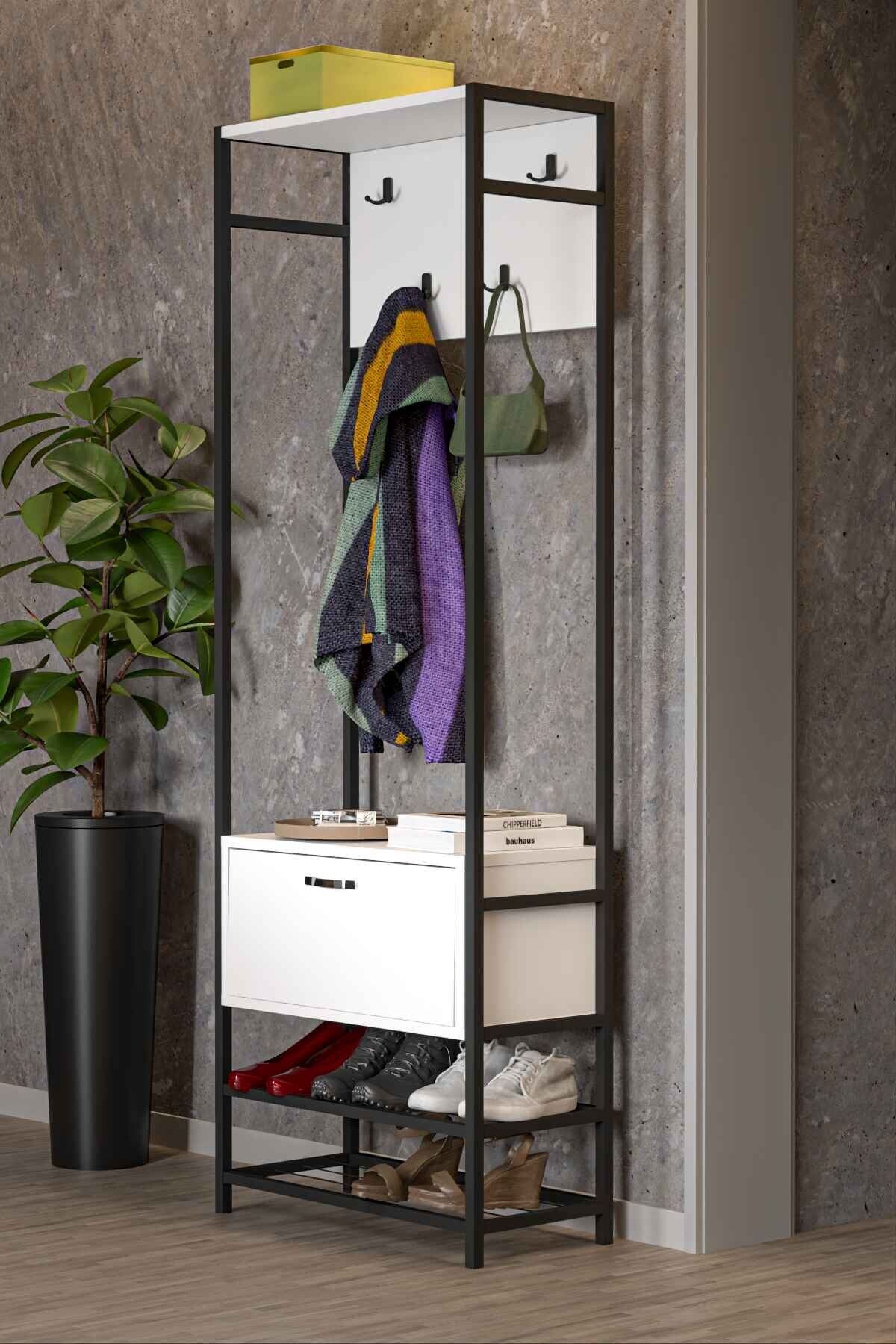
For many households, the Coat Rack Coat Hangers Cloakroom Shoe Rack serves as the perfect foundation for a mini-mudroom. It provides the essential "hang and store" functionality in a compact footprint. In a mudroom setting, you might use the hooks for heavy work jackets, pet leashes, and reusable grocery bags, while the lower shelves keep damp shoes off the main floor.
Durable Materials for High-Traffic Zones
When selecting mudroom furniture, look for materials that can withstand frequent cleaning. Suntalam (melamine-faced particleboard) is an ideal choice for this environment. It is resistant to scratches and can be easily wiped down if mud or grass is tracked in. Metal components are also excellent for mudrooms as they are sturdy and don't absorb odors.
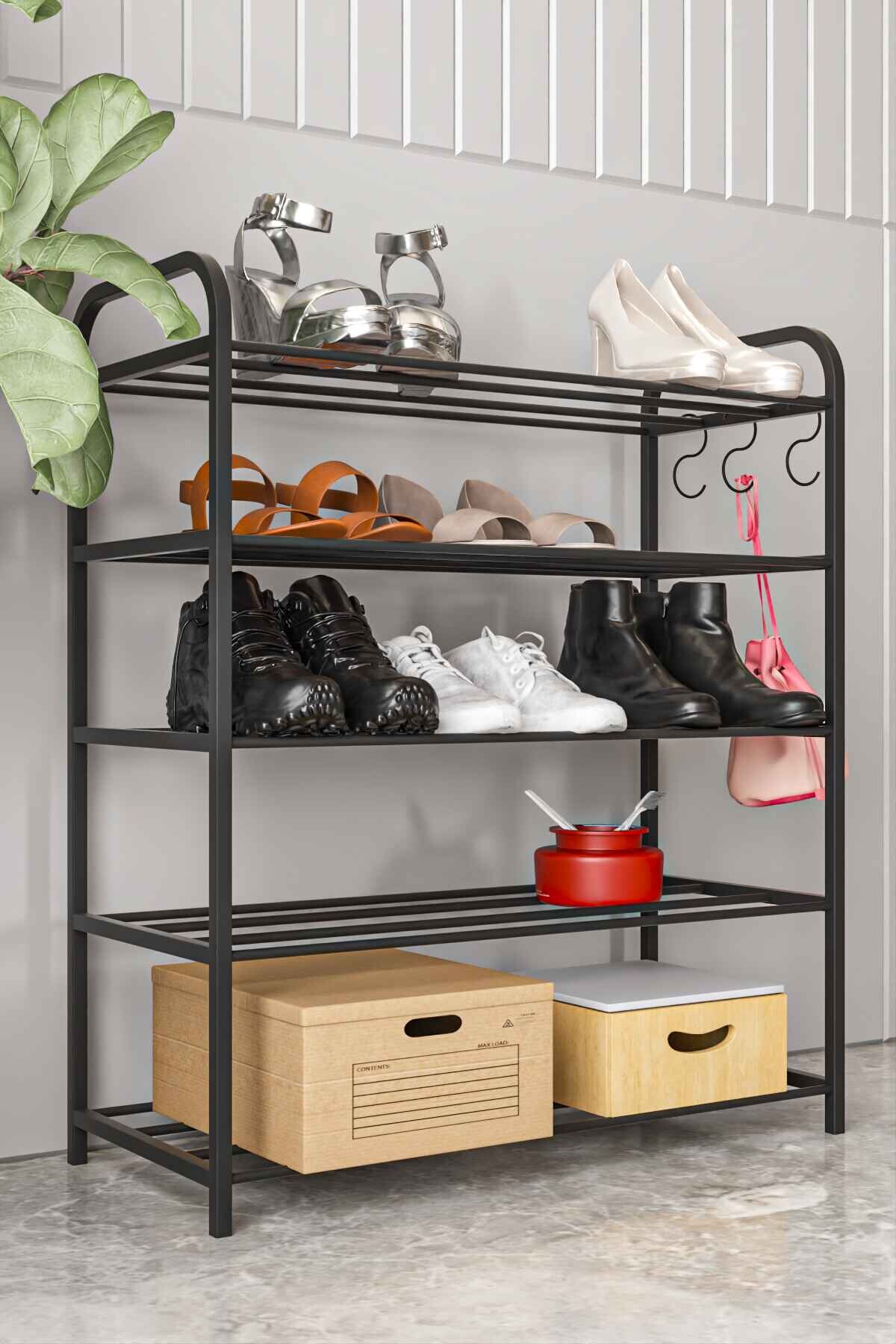
The 5 Shelf Metal Shoe Rack Multipurpose Shelf is a fantastic secondary piece for a mudroom. Its open shelves allow for maximum airflow, which is critical for drying out boots or sneakers after a rainy day. The metal frame is robust enough to handle heavy loads, making it suitable for storing everything from gardening shoes to toolboxes.
Organizing for the Whole Family
To prevent a mudroom from becoming a dumping ground, it's important to create zones. Give each family member their own hook and their own shelf. This accountability makes it much easier to maintain order.
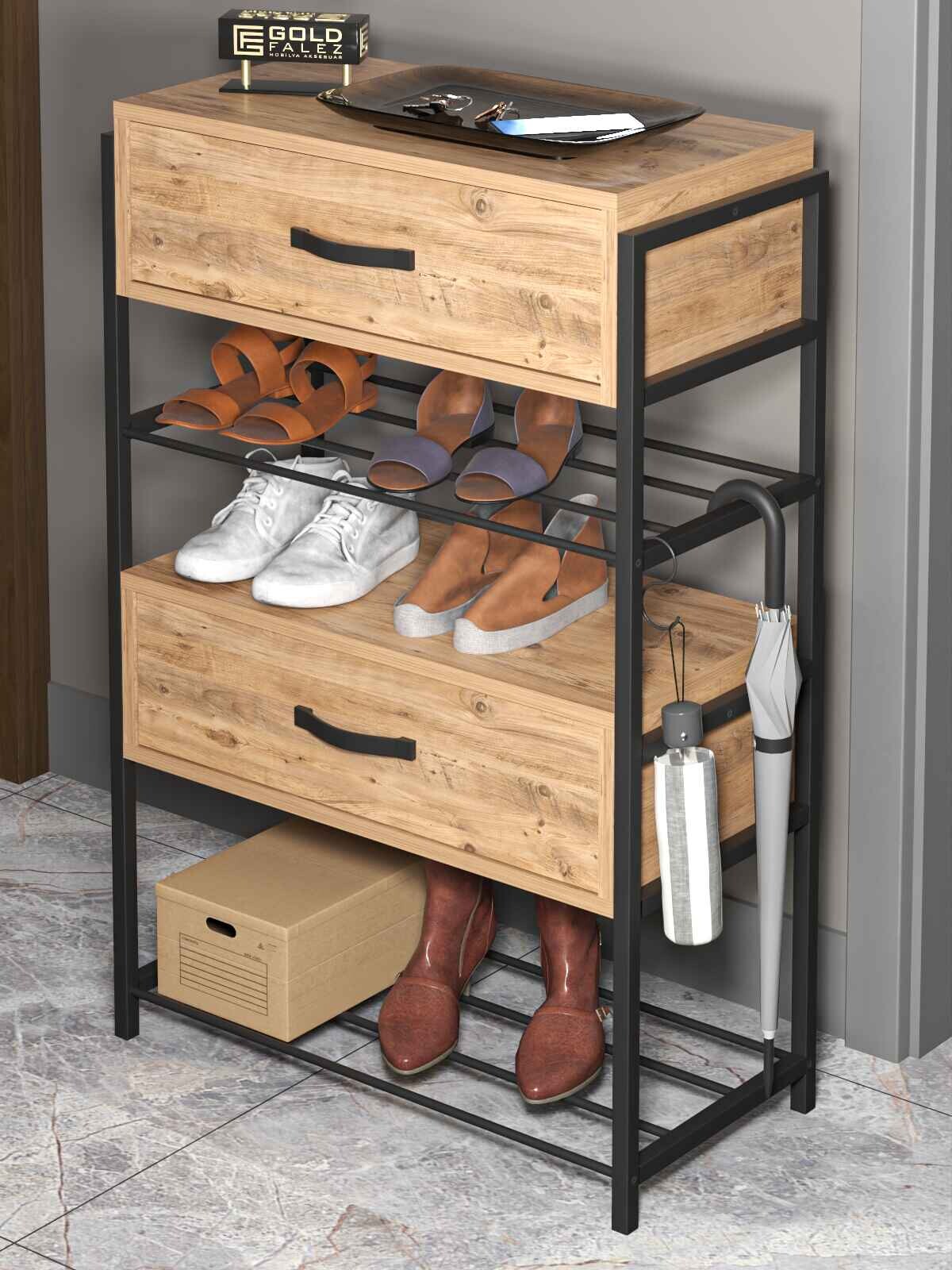
If you prefer a cleaner look, you might integrate a closed cabinet like the Wood Metal 4 Shelf 2 Door Shoe Rack into your mudroom design. This can be used for "out of season" items—storing summer sandals during the winter and heavy snow boots during the summer. Keeping the floor clear is the #1 rule of mudroom organization, and a tall cabinet is the best way to achieve that.
Adding the Finishing Touches
To take your mudroom to the next level, consider these additions:
- Heavy-Duty Mat: Place a washable rug or a sturdy coir mat at the entrance to catch the worst of the dirt before it hits your furniture.
- Baskets for Accessories: Use small baskets on your shelves for hats, gloves, and sunscreen. Labeling them by family member or category (e.g., "Dog Gear") helps everyone know where things go.
- Lighting: Make sure the area is well-lit so you can find what you need quickly during the early morning or late evening.
Frequently Asked Questions
What is the difference between an entryway and a mudroom?
An entryway is usually the formal front entrance of a home, focusing on aesthetics and a warm welcome. A mudroom is often located near a back or side door and is focused on utility, durability, and handling "messy" items. However, many modern homes combine these two concepts into one functional space.
How do I stop my mudroom from getting too cluttered?
The key is "one in, one out." If you get a new coat, donate an old one. Periodically clear out items that don't belong there, like mail or toys. Having dedicated furniture like an all-in-one rack makes it easier to see when the space is becoming overloaded.
Is metal furniture better than wood for a mudroom?
Both have their merits. Metal is extremely durable and easy to clean, making it great for wet items. Wood (or wood-look Suntalam) provides a warmer aesthetic and often offers more "hidden" storage options. A combination of both—like a wood cabinet with metal accents—is often the most practical and stylish choice.
Conclusion
Creating a mudroom—even a small one—is one of the best things you can do for your home's organization. By choosing durable, multi-functional furniture like integrated coat racks and high-capacity shoe shelves, you create a system that works as hard as you do. A well-organized mudroom doesn't just store your gear; it protects your floors, saves you time, and provides a calm, orderly transition every time you step through the door.
Frequently Asked Questions
What is the difference between an entryway and a mudroom?
An entryway is usually the formal front entrance of a home, focusing on aesthetics and a warm welcome. A mudroom is often located near a back or side door and is focused on utility, durability, and handling "messy" items. However, many modern homes combine these two concepts into one functional space.
How do I stop my mudroom from getting too cluttered?
The key is "one in, one out." If you get a new coat, donate an old one. Periodically clear out items that don't belong there, like mail or toys. Having dedicated furniture like an all-in-one rack makes it easier to see when the space is becoming overloaded.
Is metal furniture better than wood for a mudroom?
Both have their merits. Metal is extremely durable and easy to clean, making it great for wet items. Wood (or wood-look Suntalam) provides a warmer aesthetic and often offers more "hidden" storage options. A combination of both—like a wood cabinet with metal accents—is often the most practical and stylish choice.