Essential Kitchen Furniture Organization Guide for 2026
The kitchen is often referred to as the heart of the home, but for many, it can quickly become the most cluttered and stressful room in the house. As we look toward 2026, the trend in home design is shifting heavily toward "hyper-functional minimalism." This doesn't mean having nothing on your counters; rather, it means every item has a dedicated, logical home. Effective kitchen organization isn't just about aesthetics; it’s about improving your daily workflow, reducing food waste, and making the process of cooking and cleaning significantly more efficient. Whether you are working with a sprawling gourmet kitchen or a compact urban kitchenette, the principles of smart organization remain the same: declutter, categorize, and optimize your vertical and horizontal spaces.
Understanding the Golden Triangle and Beyond
In traditional kitchen design, the "Work Triangle"—the path between the refrigerator, the sink, and the stove—is the foundation of efficiency. However, modern lifestyles require us to think beyond just three points. We now have coffee stations, baking zones, and meal-prep areas that all need their own organizational logic. The first step in any organization guide is to assess your current furniture and how it serves these zones. Often, the frustration in a kitchen stems not from a lack of space, but from poorly utilized space. If your primary cabinets are overflowing, it might be time to introduce supplementary furniture that can take the pressure off your main storage areas.
Maximizing Countertop Efficiency
Countertop clutter is the number one enemy of a functional kitchen. When your prep surface is covered in spice jars, mail, and small appliances, you lose the literal "room to move." This is where targeted shelving solutions come into play. The Countertop Kitchen Shelf is a perfect example of how to reclaim lost horizontal space. By adding a tiered structure to your counter, you can store frequently used items like olive oil, salt cellars, and timers within arm's reach without sacrificing your chopping area. This 40 cm shelf, crafted from durable particleboard, provides a sturdy secondary level that effectively doubles the usable surface area in that specific corner of your kitchen.
Strategic Furniture Placement for Better Workflow
The placement of your furniture dictates the flow of your kitchen. High-traffic items should be the easiest to reach. For example, your spices and paper towels are items you grab multiple times during a single cooking session. If you have to walk across the kitchen or dig through a deep cupboard for them, you're wasting time and energy. Utilizing wall-mounted or compact countertop units can solve this. The Spice Rack Kitchen Shelf With Napkin Holder integrates two essential functions into one footprint. By keeping your most-used seasonings visible and your paper towels ready for quick spills, you create a dedicated "prep support zone" that keeps the rest of the kitchen organized.
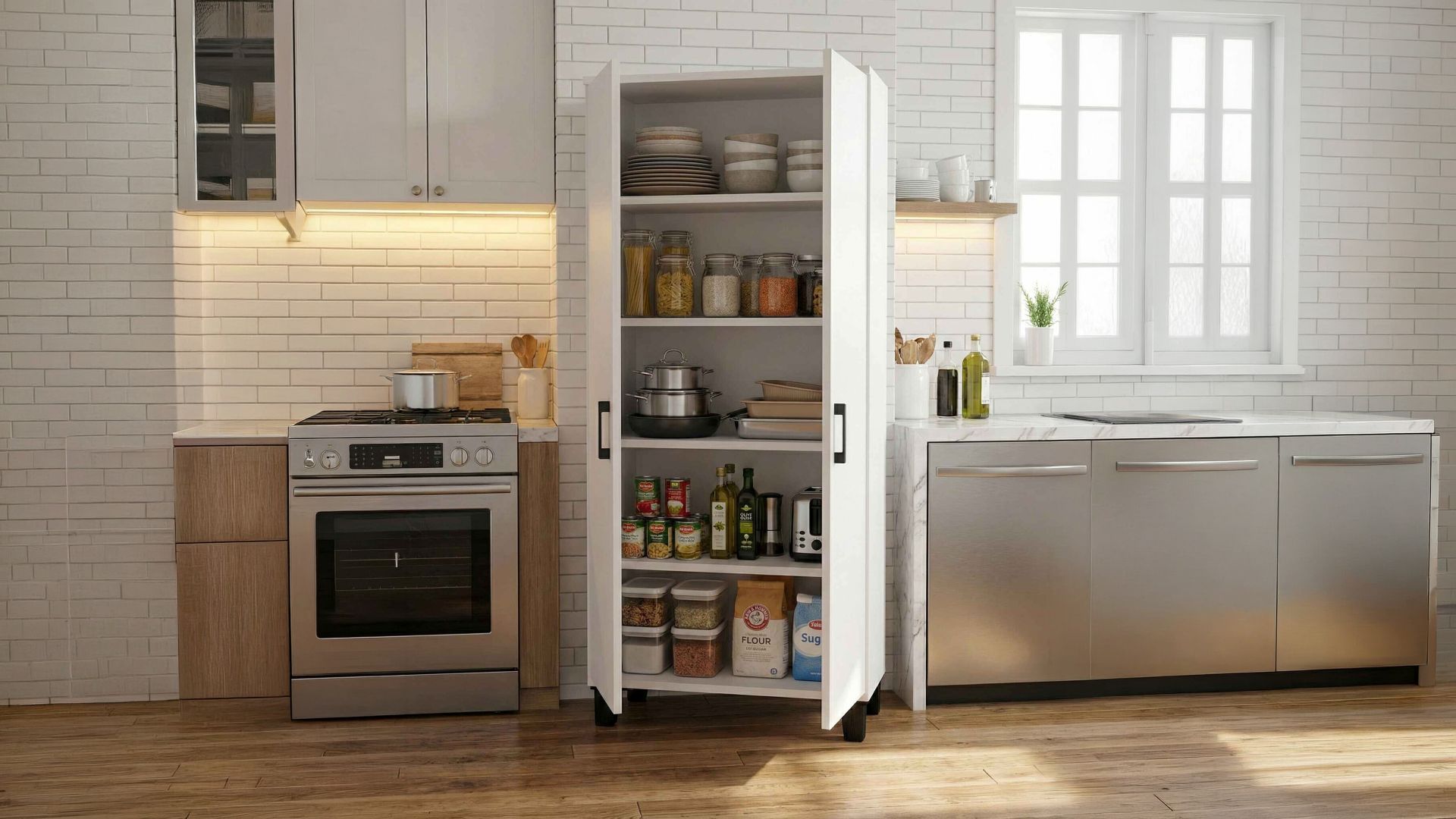
Another critical aspect of organization is housing large appliances. Ovens, microwaves, and air fryers take up massive amounts of counter space. A dedicated cabinet for these items can transform a cluttered kitchen into a sleek, professional-looking space. The Multipurpose Oven Cabinet is designed specifically for this purpose. Its 86 cm height and sturdy Suntalam construction make it an ideal home for your oven or microwave, while providing additional shelving for baking sheets or pantry staples below. Moving these heavy hitters off your main counters is the fastest way to feel like you’ve gained square footage without a full renovation.
Frequently Asked Questions
How do I start organizing a kitchen that is already cluttered?
The best way to start is by emptying one section at a time. Take everything out of a cabinet or off a counter, discard expired items or things you haven't used in a year, and then group the remaining items by category (e.g., baking, morning coffee, daily spices). Before putting them back, consider if a shelf insert or a dedicated cabinet would make that category easier to access.
What materials are best for kitchen storage furniture?
In a kitchen environment, durability and ease of cleaning are paramount. Materials like Suntalam (melamine-faced chipboard) and high-quality particleboard are excellent choices because they resist the humidity and temperature fluctuations common in kitchens. They are also easy to wipe down, which is essential for furniture that sits near cooking zones.
Is vertical storage better than horizontal storage in small kitchens?
Absolutely. Most people forget to use the "air space" in their kitchen. By adding tiered shelves on countertops or using tall, narrow cabinets, you utilize the vertical dimension that otherwise goes to waste. This keeps your horizontal surfaces clear for actual food preparation.
Conclusion
Organizing your kitchen is a journey, not a one-time event. As your cooking habits change and your collection of gadgets grows, your storage solutions must evolve too. By focusing on high-quality, functional furniture from Goldfalez, you can ensure that your kitchen remains an inspiring place to create and gather. Start small—perhaps with a single countertop shelf—and gradually build a system that supports your unique lifestyle. Remember, a well-organized kitchen is the secret ingredient to a happier, more efficient home.
Frequently Asked Questions
How do I start organizing a kitchen that is already cluttered?
The best way to start is by emptying one section at a time. Take everything out of a cabinet or off a counter, discard expired items or things you haven't used in a year, and then group the remaining items by category (e.g., baking, morning coffee, daily spices). Before putting them back, consider if a shelf insert or a dedicated cabinet would make that category easier to access.
What materials are best for kitchen storage furniture?
In a kitchen environment, durability and ease of cleaning are paramount. Materials like Suntalam (melamine-faced chipboard) and high-quality particleboard are excellent choices because they resist the humidity and temperature fluctuations common in kitchens. They are also easy to wipe down, which is essential for furniture that sits near cooking zones.
Is vertical storage better than horizontal storage in small kitchens?
Absolutely. Most people forget to use the "air space" in their kitchen. By adding tiered shelves on countertops or using tall, narrow cabinets, you utilize the vertical dimension that otherwise goes to waste. This keeps your horizontal surfaces clear for actual food preparation.